
-
Daniel Carter
- 20 Mins Read

You don’t need to spend $400 on a smartwatch to get reliable step counts, heart rate data, and sleep tracking. The budget fitness tracker category has matured fast, and in 2026 a sub-$100 band can deliver AMOLED displays, weeks of battery life, and blood oxygen monitoring that would have been flagship-only just a few years ago. We researched the specifications, official manufacturer data, and hands-on testing published by outlets including Wareable, Tom’s Guide, TechRadar, Android Central, and Consumer Reports to put together this guide to the best cheap and budget-friendly fitness trackers you can buy right now.
Every pick below is backed by verifiable specifications and third-party testing data. Where a manufacturer’s claimed battery life differs meaningfully from what reviewers experienced in real-world use, we’ve noted both figures so you know what to actually expect.
In a mostly unremarkable update year for the flagship Apple Watches, the Apple Watch SE 3 stands out as the most improved model since the last generation and the model to buy for most users. Apple gives users a lot of choices these days: the Apple Watch SE 3, the Apple Watch Ultra 3, and the Apple Watch Series 11. Some of them come in multiple sizes, and every Apple Watch model gives you at least two color options to choose from.
It has been three long years since we last saw a new Apple Watch SE, and in that time, the smartwatch has quietly become one of Apple’s most important products across the entire spectrum. The SE line has to perform a tricky balancing act: stay compelling enough to be the default Apple Watch for the masses, without cannibalizing its more expensive sibling, the Series 11. With the Apple Watch SE 3, the company has nailed that balance again.
On the outside, this is a watch we’ve seen before. The chassis is practically a time capsule from 2019, and the feature list still omits health sensors that its flagship counterpart gets. Inside, it’s a different story entirely. Giving SE 3 the latest S10 chip means top-tier performance is delivered in a smooth, future-proof experience, with compromises made in all the right places.
This is not a watch for data-obsessed athletes who demand multi-day battery life. It’s for someone beginning their fitness journey, for kids and teenagers, or for the millions of iPhone users who simply want notifications, Apple Pay, and phone-free music on the wrist. As a gateway to the Apple Watch ecosystem, its price is hard to fault.
Quick Answer: Our Top Picks at a Glance
- Best Overall: Xiaomi Smart Band 10 — a 1.72-inch AMOLED display, up to 21 days of battery life, and a roughly $49 price tag make this the best all-around value in the category.
- Best Under $100: Fitbit Inspire 3 — the most polished app experience and ecosystem at this price, with up to 10 days of battery life.
- Best Under $50: Amazfit Band 7 — a large 1.47-inch AMOLED screen, built-in Alexa, and up to 18 days of battery life for around $49.
- Best With Built-In GPS: Fitbit Charge 6 — phone-free route tracking, ECG, and Google Maps and Wallet integration for $159.95.
- Best Budget Garmin: Garmin Vivosmart 5 — Garmin’s training metrics and Body Battery energy tracking in a $149.99 band.
- Best for Running: Garmin Forerunner 55 — a true GPS running watch with adaptive training plans for $199.99.
- Best for Android Users: Samsung Galaxy Fit3 — a 1.6-inch AMOLED display and up to 13 days of battery life for around $59.99.
- Best Smart Ring: RingConn Gen 2 Air — subscription-free sleep and recovery tracking in a 2.5-gram ring for around $199.
For years, Apple has been continuing its good, better, best tiers strategy. SE 3 is the “good” entry point. Pay through an extra $150, and you get the “better” Series 11, with its beautiful, modern design, edge-to-edge always-on display, faster charging, and a more advanced health suite (ECG and SpO2). Go all the way to the top, and the “best” Ultra 3 offers a rugged, premium build that packs personality, better GPS tracking, and multi-day battery life of up to 36 hours.
Positioned against fitness-focused trackers like the Huawei Watch Fit 4 and Garmin Forerunner 165, SE 3 tells a different story. Those devices offer more in-depth training analysis, and crucially, they do not need to be charged every day. But they’re fitness trackers, not smartwatches. Third-party app support is minimal, and iPhone integration is basic at best.
That’s really the whole point of Apple’s Watch SE. It’s the less expensive variation on the same theme, and it still packages almost everything you’d want from an Apple Watch, just brought down to a wallet-friendly level. Its main skill isn’t tracking your VO2 max better than a dedicated running watch; it’s being a proper smartwatch. SE 3 delivers the same seamless, second-screen experience of Apple’s services that its pricier siblings do, backed by a rich app store, flawless music controls, and genuinely deep iOS integration. At $249, there’s simply no competitor at this price that matches what SE 3 offers.
Best Overall Budget Fitness Tracker: Xiaomi Smart Band 10
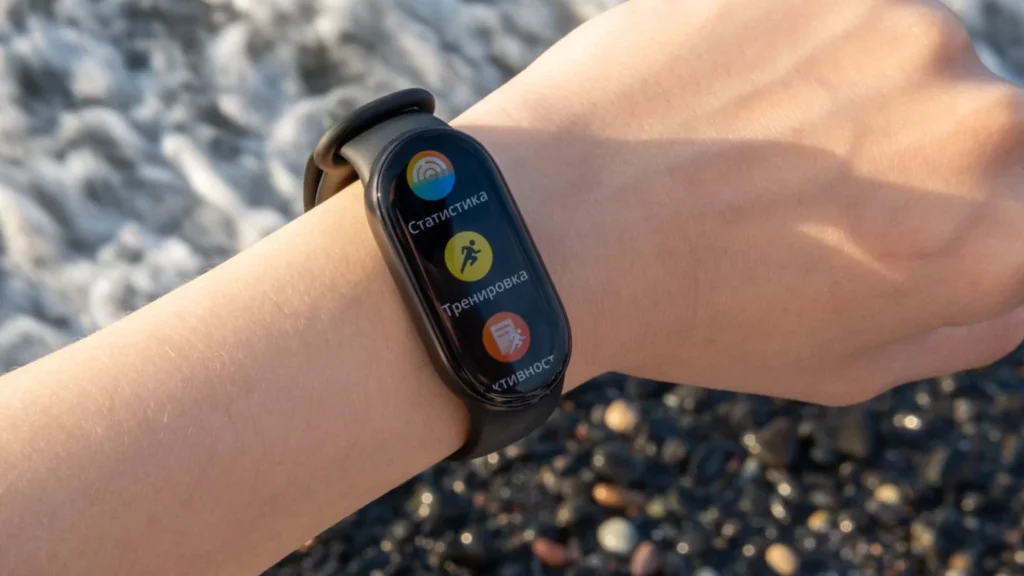
The Xiaomi Smart Band 10 is our pick for the best overall budget fitness tracker in 2026. At a global price of roughly $49, it pairs a genuinely bright, large AMOLED display with battery life that rivals trackers costing three times as much, and Xiaomi has closed the heart rate accuracy gap that dogged earlier Smart Band generations.
Apple has been a bit more restrained with color this time. Apple cut its color options down, and SE 3 now comes in just Midnight and Starlight, axing the silver from the lineup entirely. The good news is that both 40 and 44mm sizes are still available.
The display itself is an LTPO OLED panel, with a resolution of 324 by 394 pixels for the 40mm and 368 by 448 pixels for the 44mm. That’s a fair bit smaller than the largest 46mm Apple Watch Series 11, which packs a 416 by 496 pixels display. Peak brightness is where things get interesting: the display reaches up to 1000 nits of brightness outdoors and can dim down to just 2 nits, comfortable enough for nighttime use. Crucially, this is Apple’s first Watch SE with an always-on display, letting you check the time without raising your wrist.
Key Specifications
| Price | Approximately $49 |
| Display | 1.72-inch AMOLED display with up to 1500 nits peak brightness and a 60Hz refresh rate. |
| Battery Life | Up to 21 days under typical use, or around 9 days with the Always-On Display enabled. |
| Battery Capacity | 233mAh battery with approximately 1 hour required for a full charge. |
| GPS | No built-in GPS; supports connected GPS through a paired smartphone. |
| Water Resistance | 5ATM water resistance (up to 50 meters). |
| Compatibility | Compatible with both Android and iOS devices. |
| Sport Modes | Supports 150+ workout and activity tracking modes. |
| Sensors | Optical heart rate sensor, SpO₂ monitoring, stress tracking, advanced sleep monitoring, and an electronic compass. |
| Subscription | No subscription required. All essential health and fitness features are available at no additional cost. |
Strengths
Limitations
Best Budget Fitness Tracker Under $100: Fitbit Inspire 3
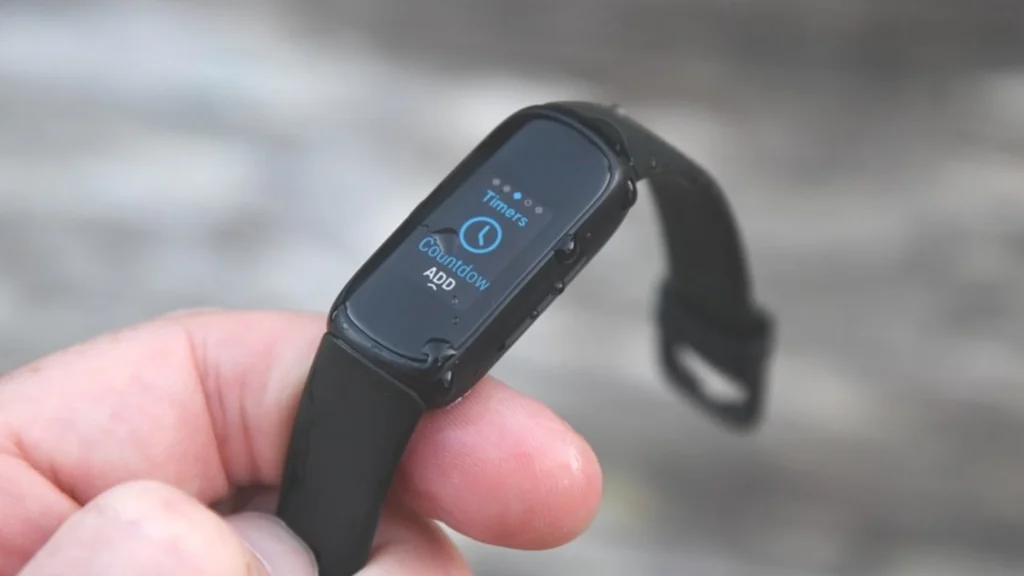
The Fitbit Inspire 3 remains one of the most recommended fitness trackers under $100, and reviewers including Wirecutter, PCMag, and Business Insider continue to point to it as a top affordable pick heading into 2026. It doesn’t have the biggest screen or the longest battery life on this list, but it wins on software polish and the depth of the Fitbit app ecosystem.
The display’s limited specs mean it doesn’t offer ticking-seconds-hand animations the way pricier models do. That’s a fair trade, though, given everything else you’re getting. With watchOS 26 running on top, the whole interface feels alive and present, even at a glance, and the always-on screen genuinely changes how you interact with the watch day to day.
Key Specifications
| Price | $99.95 |
| Display | 0.76-inch color AMOLED touchscreen |
| Battery Life | Up to 10 days with typical use, or approximately 3–4 days when the Always-On Display is enabled. |
| GPS | No built-in GPS; uses your smartphone’s GPS for connected tracking. |
| Water Resistance | Water-resistant up to 50 meters (5ATM). |
| Compatibility | Compatible with Android 11.0+ and iOS 16.4+ devices; requires a Google account. |
| Sport Modes | 20+ exercise modes with real-time workout tracking. |
| Sensors | Heart rate sensor, SpO₂ monitoring, skin temperature sensor, and stress management powered by pulse and respiration tracking. |
| Subscription | Fitbit Premium is optional at $9.99/month or $79.99/year. A 6-month trial is included with eligible new device purchases. |
Strengths
Limitations
Best Budget Fitness Tracker Under $50: Amazfit Band 7

The Amazfit Band 7 is the pick for anyone who wants the most screen and battery life per dollar. At around $49, it’s part of Amazfit’s entry-level Essential Series, but its 1.47-inch AMOLED display and built-in Alexa support make it feel like a much pricier device.
Key Specifications
| Price | Approximately $49 |
| Display | 1.47-inch AMOLED display with 198 × 368 resolution |
| Battery Life | Up to 18 days (typical use), up to 28 days in Battery Saver mode, and around 12 days with heavy usage. |
| Battery Capacity | 232mAh battery with approximately 2 hours for a full charge. |
| GPS | No built-in GPS; supports connected GPS through a paired smartphone. |
| Water Resistance | 5ATM (water-resistant up to 50 meters) |
| Compatibility | Compatible with Android 7.0 or later and iOS 12.0 or later. |
| Sport Modes | 120+ sports and workout modes. |
| Sensors | BioTracker™ 3.0 PPG sensor for heart rate, blood oxygen (SpO₂), and stress monitoring, plus built-in Amazon Alexa (microphone only, no speaker). |
| Subscription | Zepp Aura Premium is optional (approximately $70/year) and is not required to access the tracker’s core health and fitness features. |
Strengths
Limitations
Best Budget Fitness Tracker With Built-In GPS: Fitbit Charge 6

If phone-free GPS tracking is non-negotiable, the Fitbit Charge 6 is the most complete budget option. At $159.95, it sits above most of the trackers on this list, but it’s the first Fitbit tracker with Google apps built in, including Google Maps, Google Wallet, and YouTube Music controls, alongside a genuinely improved heart rate sensor.
Key Specifications
| Display | 1.04-inch color AMOLED touchscreen |
| Battery Life | Up to 7 days (typical use); around 2 days with Always-On Display enabled, and approximately 5 days with Always-On Display disabled. |
| GPS | Built-in GPS and GLONASS |
| Water Resistance | 5ATM (up to 50 meters) |
| Compatibility | Compatible with Android and iOS devices; requires a Google account. |
| Sport Modes | 40+ exercise modes with real-time workout statistics. |
| Sensors | Heart rate (machine-learning enhanced), ECG, EDA stress sensor, SpO₂, and skin temperature sensor. |
| Subscription | Fitbit Premium (optional): $9.99/month or $79.99/year. Includes a 6-month free trial for eligible users. |
Strengths
Limitations
Best Budget Garmin Fitness Tracker: Garmin Vivosmart 5

The Garmin Vivosmart 5 is the entry point into Garmin’s ecosystem and its Body Battery energy-tracking metric, without stepping up to a full GPS sports watch. It costs more than most bands on this list, but for Garmin loyalists who want fitness-grade heart rate accuracy in a slim, everyday-wearable form factor, it remains a solid choice.
Key Specifications
| Price | ~$49 |
| Display | 1.72-inch AMOLED, 1500 nits peak brightness, 60Hz refresh rate |
| Battery Life | Up to 21 days typical use; around 9 days with always-on display |
| Battery Capacity | 233mAh; approx. 1 hour to full charge |
| GPS | No built-in GPS (connected GPS via phone) |
| Water Resistance | 5ATM (50 meters) |
| Compatibility | Android and iOS |
| Sport Modes | 150+ tracking modes |
| Sensors | Optical heart rate, SpO2, stress, sleep tracking, electronic compass |
| Subscription | None required |
Strengths
Limitations
Best Budget Fitness Tracker for Running: Garmin Forerunner 55
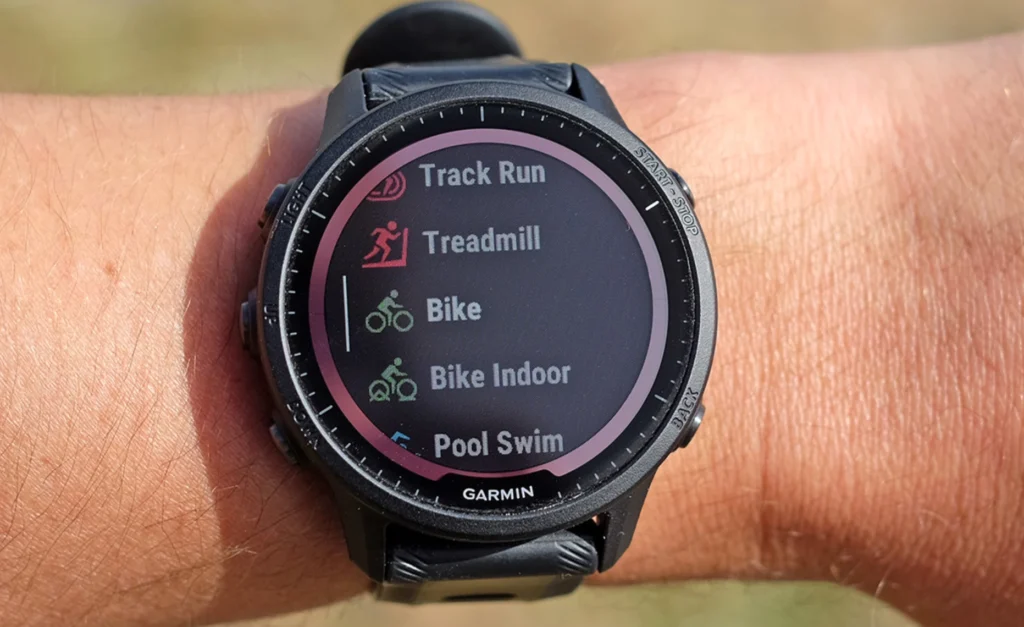
For runners who’ve outgrown a basic activity band, the Garmin Forerunner 55 is the standout budget pick. It has an MSRP of $199.99, putting it at the top end of this guide’s price range, but it’s a genuine GPS running watch, not just a tracker with a GPS chip bolted on, and it remains one of the best-selling entry-level running watches on the market.
Key Specifications
| Price | $199.99 MSRP (frequently discounted to $149–$179) |
| Display | Color transflective MIP display, button-operated (no touchscreen) |
| Battery Life | Up to 20 hours in GPS mode; up to 2 weeks in smartwatch mode |
| GPS | Built-in GPS |
| Water Resistance | 5ATM (50 meters) |
| Compatibility | Android and iOS |
| Sport Modes | Running, cycling, swimming, walking, cardio, and yoga profiles, plus PacePro pacing strategies |
| Sensors | Elevate V3 optical heart rate sensor, VO2 Max estimate, Body Battery |
| Subscription | None required; free Garmin Coach adaptive training plans included |
Strengths
Limitations
Best Budget Fitness Tracker for Android Users: Samsung Galaxy Fit3
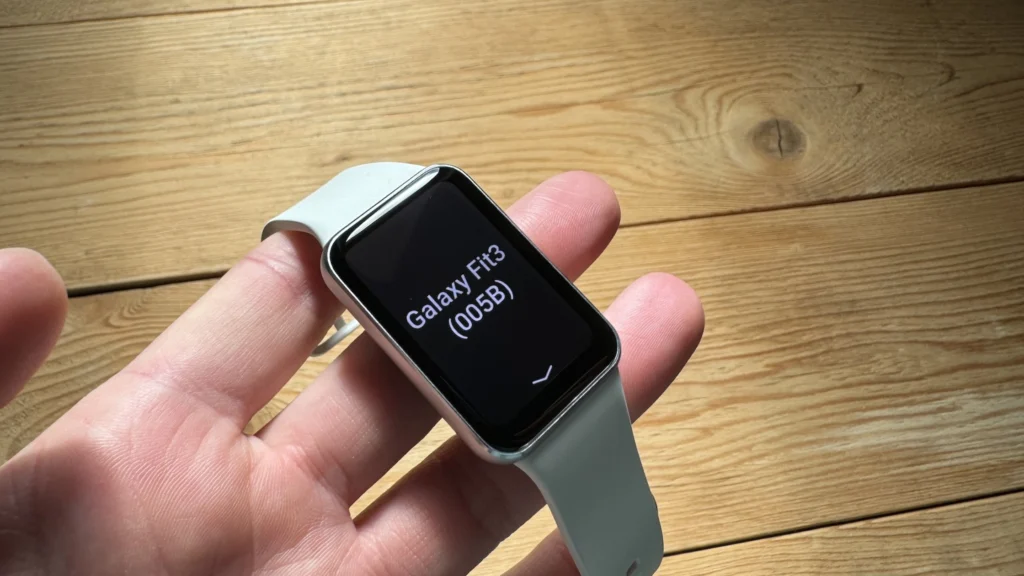
The Samsung Galaxy Fit3 is one of the most affordable branded trackers on the market, and at around $59.99, it undercuts most rivals while still feeling notably more polished than its price suggests. The catch is that it’s Android-only, and specifically works best paired with a Samsung Galaxy phone.
Key Specifications
| Price | ~$59.99 |
| Display | 1.6-inch AMOLED, 256×402 resolution |
| Battery Life | Up to 13 days claimed; testers consistently reported around 10 days in real-world use |
| Battery Capacity | 208mAh |
| GPS | No built-in GPS (connected GPS via phone) |
| Water Resistance | 5ATM |
| Compatibility | Android only; not compatible with iPhone |
| Sport Modes | 100+ workout modes with auto-detection for common activities |
| Sensors | Accelerometer, gyroscope, barometer, optical heart rate, blood oxygen (SpO2), light sensor |
| Subscription | None required |
Strengths
Limitations
Best Budget Fitness Ring Tracker: RingConn Gen 2 Air
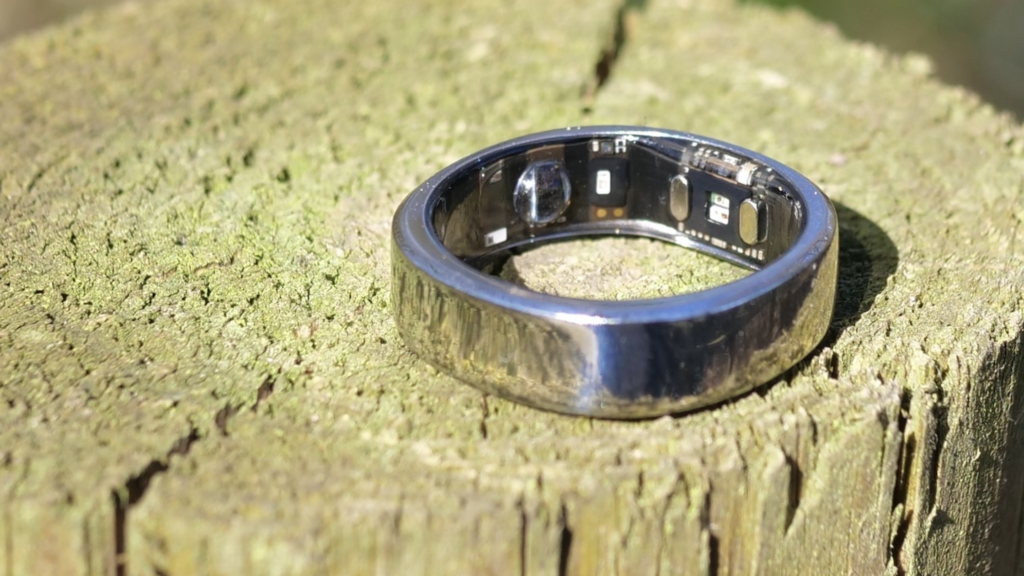
If a wrist-worn band or watch isn’t for you, the RingConn Gen 2 Air is the strongest budget entry into smart ring tracking. At around $199 with no subscription fee, it undercuts the Oura Ring 4 and Samsung Galaxy Ring on both upfront price and long-term cost, while sharing the same core sensors as RingConn’s pricier Gen 2 ring.
Key Specifications
| Price | ~$199 (one-time; no subscription) |
| Weight | 2.5 grams; approximately 2mm thick |
| Material | Stainless steel |
| Battery Life | Up to 10 days claimed; reviewers reported 8–11 days in real-world testing |
| Charging | USB-C magnetic dock; approx. 90 minutes to full charge |
| GPS | No GPS; not designed for outdoor route tracking |
| Water Resistance | 10ATM (100 meters) |
| Compatibility | Android and iOS |
| Sport Modes | 6 workout modes: outdoor/indoor running, outdoor/indoor cycling, outdoor walking, and hiking |
| Sensors | Heart rate, HRV, SpO2, skin temperature, respiratory rate; sleep-stage tracking (light, deep, REM) |
| Subscription | None required; all features included with purchase |
Strengths
Limitations
Feature Comparison: Budget Fitness Trackers at a Glance
Here’s how all eight picks stack up side by side on the specs that matter most when choosing a budget fitness tracker.
Price, Battery Life & GPS Compared
| Tracker | Price | Battery Life | Built-In GPS |
|---|---|---|---|
| Xiaomi Smart Band 10 | ~$49 | Up to 21 days | No |
| Fitbit Inspire 3 | $99.95 | Up to 10 days | No |
| Amazfit Band 7 | ~$49 | Up to 18 days | No |
| Fitbit Charge 6 | $159.95 | Up to 7 days | Yes |
| Garmin Vivosmart 5 | $149.99 | Up to 7 days | No |
| Garmin Forerunner 55 | $199.99 MSRP | Up to 20 hrs (GPS) / 2 weeks (Smartwatch) | Yes |
| Samsung Galaxy Fit3 | ~$59.99 | Up to 13 days | No |
| RingConn Gen 2 Air | ~$199 | Up to 10 days | No |
Water Resistance & Subscription Requirements Compared
| Tracker | Water Resistance | Compatibility | Subscription Required? |
|---|---|---|---|
| Xiaomi Smart Band 10 | 5ATM | Android & iOS | No |
| Fitbit Inspire 3 | 50m | Android & iOS | Optional (Fitbit Premium) |
| Amazfit Band 7 | 5ATM | Android & iOS | Optional (Zepp Aura) |
| Fitbit Charge 6 | 5ATM | Android & iOS | Optional (Fitbit Premium) |
| Garmin Vivosmart 5 | 5ATM | Android & iOS | No |
| Garmin Forerunner 55 | 5ATM | Android & iOS | No |
| Samsung Galaxy Fit3 | 5ATM | Android only | No |
| RingConn Gen 2 Air | 10ATM | Android & iOS | No |
How to Choose the Best Cheap Fitness Tracker for You?

Every tracker on this list is a good value, but the right one for you depends on how you plan to use it. Here’s what actually matters when narrowing down your choice.
Do You Need Built-In GPS, or Is Connected GPS Enough?
Most of the trackers in this guide, including the Xiaomi Smart Band 10, Amazfit Band 7, Garmin Vivosmart 5, and Samsung Galaxy Fit3, rely on connected GPS, meaning they borrow your phone’s location data over Bluetooth rather than housing their own GPS chip. That keeps the price and battery drain down, but it means you need your phone with you for an accurate route map and distance reading. If you regularly run, cycle, or hike without your phone, built-in GPS on the Fitbit Charge 6 or Garmin Forerunner 55 is worth the higher price. If you always carry your phone anyway, connected GPS is a perfectly reasonable way to save money.
Fitness Band or Smartwatch-Style Design?
Slim bands like the Xiaomi Smart Band 10, Fitbit Inspire 3, Amazfit Band 7, and Samsung Galaxy Fit3 prioritize a low profile that’s comfortable for 24/7 wear, including sleep tracking. Trackers built around a squarer, more watch-like case, such as the Fitbit Charge 6 and Garmin Vivosmart 5, trade a bit of that discreteness for larger displays and more on-device functionality. If you want something that disappears on your wrist, or you’re specifically prioritizing sleep tracking, a slim band or the RingConn Gen 2 Air smart ring is worth considering over a bulkier design.
How Much Battery Life Do You Actually Need?
Battery life varies enormously across this list, from roughly a week on the Fitbit Charge 6 and Garmin Vivosmart 5 to nearly three weeks on the Xiaomi Smart Band 10 and Amazfit Band 7. The general rule holds across every device here: built-in GPS and always-on displays are the two biggest battery drains, which is exactly why the trackers without them tend to last the longest. If you hate charging routines, prioritize a tracker with no built-in GPS and keep the always-on display switched off.
Subscription-Free vs. Subscription-Based Models
The Xiaomi Smart Band 10, Garmin Vivosmart 5, Garmin Forerunner 55, Samsung Galaxy Fit3, and RingConn Gen 2 Air all deliver their full feature set with no ongoing subscription. Fitbit’s Inspire 3 and Charge 6 include a free trial of Fitbit Premium, but Fitbit locks features like Daily Readiness Score and detailed sleep analysis behind a $9.99-a-month subscription once that trial ends. If a recurring fee is a dealbreaker, that’s a meaningful point in favor of the non-Fitbit options on this list.
Android and iOS Compatibility
Every tracker on this list works with both Android and iOS, with one notable exception: the Samsung Galaxy Fit3 is Android-only and doesn’t pair with an iPhone at all. If you’re on iOS, cross it off your list regardless of the price. Everyone else on this list, including iPhone users, has the full range of eight trackers to choose from.
Frequently Asked Questions
Yes, for most people. Budget fitness trackers in 2026 track the same core metrics as $400 smartwatches, including steps, heart rate, sleep stages, and blood oxygen, and several models on this list, like the Xiaomi Smart Band 10 and Amazfit Band 7, add features like AMOLED displays and multi-week battery life that used to be exclusive to premium devices. Where you’ll notice the difference is in GPS accuracy, advanced training metrics, and how polished the companion app feels. Serious athletes training for specific events may eventually want to upgrade to a dedicated GPS running watch like the Garmin Forerunner 55, but for everyday activity, sleep, and heart rate tracking, a budget tracker delivers real value.
Yes, on most of the trackers in this guide. The Xiaomi Smart Band 10, Amazfit Band 7 (core features), Garmin Vivosmart 5, Garmin Forerunner 55, Samsung Galaxy Fit3, and RingConn Gen 2 Air all work fully with no recurring fee. Fitbit devices, including the Inspire 3 and Charge 6, include a free Fitbit Premium trial, but some of the deeper insights, like Daily Readiness Score and advanced sleep analysis, require a $9.99-a-month subscription once the trial period ends. Basic tracking, including steps, heart rate, and sleep stages, still works on Fitbit devices without a subscription.
Fitness trackers, including every band and ring in this guide, are built primarily around health and activity metrics, with a smaller display, simpler interface, and a strong focus on all-day and overnight wear. Smartwatches add a broader operating system, third-party apps, on-wrist calling or voice assistants, larger touchscreens, and typically shorter battery life measured in a day or two rather than a week or more. If your priority is monitoring your health and workouts without the distraction of notifications and apps, a fitness tracker is usually the better fit, and it will almost always cost less.
The Xiaomi Smart Band 10 is the strongest budget alternative to Fitbit’s Inspire 3, offering a larger, brighter display and roughly double the battery life for around half the price, without a subscription requirement. The tradeoff is a less polished companion app and less robust software ecosystem than Fitbit’s. If you specifically want a built-in GPS alternative to the Fitbit Charge 6, the Garmin Vivosmart 5 is the closest Garmin equivalent, though it relies on connected GPS via your phone rather than a built-in chip.
Likely, yes. Xiaomi has already released the Smart Band 10 Pro in China, adding a brighter 2,000-nit AMOLED display, built-in GNSS, HRV monitoring, and NFC support for around $60, though as of this guide’s publication it has not launched in the US. Fitbit has not announced a successor to the Charge 6 or Inspire 3, and Garmin has not confirmed a Vivosmart 6 or Forerunner 55 successor, though both product lines are typically refreshed every few years. We’ll update this guide as new budget trackers launch and as pricing changes on the models covered here.
Bottom Line: Which Budget Fitness Tracker Should You Buy?
For most people, the Xiaomi Smart Band 10 is the smartest buy in this entire category: a bright, large AMOLED display, genuinely excellent battery life, and improved heart rate accuracy, all for around $49 with no subscription attached. If you want the most refined app experience and don’t mind paying more, the Fitbit Inspire 3 remains an easy recommendation under $100. Runners and cyclists who need to leave their phone at home should look to the Fitbit Charge 6 or, for a more running-specific experience, the Garmin Forerunner 55. Android-only users on an especially tight budget should consider the Samsung Galaxy Fit3, and anyone who wants health tracking without wearing anything on their wrist at all should take a serious look at the RingConn Gen 2 Air.
Whichever tracker you choose, the good news is that the budget end of the fitness wearable market has never offered more capability for the money than it does right now.
SHARE.
